Retaining wall surfaces sit in that intriguing space where landscape job and civil work overlap. On one site, the wall surface is there to transform a steep yard into usable degrees. On an additional, it becomes part of a much larger work, supporting dirt near a road, railway, bridge technique, or reclaimed location. The scale changes, the materials might alter, and the design process definitely becomes even more requiring, however the fundamental function stays the exact same. A preserving wall surface holds back dirt or comparable product and stands up to the sideways pressure of the kept ground.
That seems straightforward until you stand on a real website and take a look at what the wall surface is truly being asked to do. Dirt pressure boosts with depth. Water can build pressure where it has no place to go. The ground behind the wall surface may be lugging extra weight from website traffic, paving, or other tons. On some jobs, the largest error is considering the wall as a decorative attribute initially and an architectural component 2nd. The excellent retaining wall installation tasks are the ones where that order is reversed.
Where keeping walls suit actual projects
In landscape job, a keeping wall often develops functional outdoor space. It can reduce an incline into balconies, hold a yard bed in position, or protect a yard from steady disintegration. In civil applications, the stakes are typically higher and the wall has a tendency to be tied into wider site engineering. Roadways, rail corridors, bridge methods, slope stablizing functions, and land improvement projects all count on keeping structures in one form or another.
Even when the objective looks cosmetic on the surface, the wall is still resisting side planet stress. That is the heart of the matter. A wall surface that looks neat on day one however disregards soil problems or drainage can relocate, lump, fracture, or fall short long previously any person anticipated. I have seen people concentrate hard on the visible face of a wall, the colour, the finish, the planting, after that treat the hidden side as an afterthought. In method, the undetected side is where most of the performance lives.
The wall type requires to suit the job
There is no global best wall surface. The best selection depends on the website, the kept height, soil problems, drainage requirements, and whatever tons are acting behind the wall surface. Validated engineering advice generally describes gravity wall surfaces, cantilever strengthened concrete walls, and strengthened wall surfaces. Each belongs to a various context.
Gravity walls count largely on their own mass to withstand the stress of the dirt. They are conceptually uncomplicated, however that does not indicate they are forgiving. If the wall surface is not proportioned effectively or the support problems are inadequate, straightforward can still fail. Cantilever strengthened concrete wall surfaces use architectural action instead of mass alone, which usually makes good sense where geometry and packing require a more engineered reaction. Strengthened walls enter into the image on applications where extra assistance is needed to aid the wall withstand the preserved load.
An excellent retaining wall builder does not start forcibly one preferred system onto every block. They begin by reviewing the site. A good retaining wall contractor does the very same, especially when a landscape brief starts to wander towards civil region. That line gets crossed more often than clients expect.
Why drainage chooses so much
If there is one problem that divides long lasting wall surfaces from difficulty, it is water drainage. This is not a tiny information. This is the detail.
Backfill behind a preserving wall should enable water to run away. Free-draining granular material is frequently utilized for that reason, and drainage systems typically consist of drain pipelines or weep holes. The reasoning is direct. Water caught behind the wall includes hydrostatic pressure. Saturated backfill is a significant cause of wall surface failing due to the fact that the wall surface is no longer resisting just dirt. It is resisting soil plus water pressure.
Anyone that has actually hung around around fallen short wall surfaces has actually seen the pattern. The face may lean. Joints might open up. The wall may break or clear up unevenly. In some cases the outward indications show up slowly, in some cases after a wet period. The root problem is often that drainage was overlooked, blocked, undersized, or dealt with as optional.
This is why experienced retaining wall installers do not deal with excavation, backfill, and drain as background tasks. Those are central tasks. You can invest heavily on the noticeable wall material and still lose the work if water can not get out from behind it.
Installation is not simply structure, it is managed sequencing
Retaining wall surface installation has a rhythm to it. It is not only regarding placing devices or concrete in place. It is about presenting the work so the wall surface, the ground, and the water drainage system all feature together. The very best crews comprehend that series matters because each phase influences the one after it.
A common process usually includes these core steps:
Assess the site conditions and validate the style approach. Excavate to the needed line and level. Prepare the base and set up the wall surface system in sequence. Place appropriate backfill and water drainage elements behind the wall. Complete the surrounding ground so water is directed smartly away from the structure.That listing looks small on paper, however on site each action brings judgment. Excavation that is too hostile can disturb surrounding ground. Backfill that is not free-draining can catch water. Drain pipes that are badly established or blocked can make the entire system underperform. The information job is where retaining wall installers make their keep.
Landscape walls and civil wall surfaces are relatives, not twins
It is appealing to swelling all keeping wall surfaces right into one group, yet the sensible differences in between landscape and civil applications matter. In landscape settings, the wall may support yard beds, yards, paving, or level modifications around a home. In civil setups, the wall might sit beside transportation framework or in a wider slope stabilization or land growth scheme. The effects of motion or failure have a tendency to scale up fast.
What stays constant is the engineering purpose. The wall withstands lateral earth pressure, which stress enhances with deepness. What modifications is the complexity around it. Civil applications often entail a lot more demanding filling conditions, tighter coordination with other works, and a stronger need for official design analysis. Even landscape tasks can relocate right into that category as soon as heights increase, dirt problems come to be unclear, or added tons are present behind the wall.
This is where homeowners and designers occasionally misread the job. They request for a retaining wall installer when what they really require is a retaining wall contractor functioning carefully with design input. Or they search for retaining wall contractors Melbourne since they desire someone regional and sensible, yet the real inquiry is not just who can construct it. The question is who can build the right point for that site.
Site conditions are never a minor footnote
Retaining wall design depends on site-specific dirt conditions, water drainage, surcharge lots, and regional building ordinance. That phrase, site-specific, matters more than it first shows up. Two blocks on the exact same road can behave differently if the dirt account adjustments, if one website has bad drainage, or if one wall surface rests below a driveway while the various other borders just a garden bed.
Surcharge lots are particularly essential to consider in plain language. If there is extra weight behind the wall surface, that can influence the design. It might come from paving, kept products, or nearby website use. The point is not to guess. The factor is to identify that what occurs behind the wall belongs to the wall job.
Local building ordinance matter as well, and because those policies vary by location, it is not wise to count on general presumptions. A retaining wall builder Melbourne customers employ for one suburb may still require a different level of style input or authorization path on one more job, relying on site problems and what the wall surface is sustaining. The very same opts for any retaining wall contractor Melbourne property owners bring in for sloped land or infrastructure-adjacent job. Local expertise aids, but it does not change proper analysis.
Engineering is not red tape, it is threat control
People sometimes deal with design evaluation as something that reduces a task down. On the wrong task, that attitude obtains expensive.
Because retaining wall performance depends upon soil, water drainage, additional charge lots, and code requirements, design analysis is usually required. Typically is the crucial word. It reflects real-world irregularity. The bigger the wall, the extra complex the website, or the more substantial the effects of failing, the less reasonable it becomes to depend on rule-of-thumb thinking.
A solid retaining wall contractor knows when to bring design in early as opposed to after an issue shows up. That can save time, cash, and rework. One of the most frustrating retaining wall installation tasks are usually the ones where the website restrictions end up being evident halfway through excavation and everyone recognizes the initial presumptions were also loose.
On the other hand, engineering alone does not save an inadequate build. The design and the installment have to fulfill in the middle. Great plans still require disciplined site implementation. Good crews still need to recognize why water drainage information issue. The handoff between design intent and real construction is where several tasks either resolve right into area or start drifting towards failure.
What clients should ask before job begins
A lot of avoidable problem begins with vague instruction. If you are speaking to a retaining wall installer or contrasting retaining wall contractors, the helpful inquiries are not the fancy ones. They are the useful ones that reveal whether the work is being analyzed properly.
A brief checklist assists below:
- What is the wall in fact keeping, and how deep is the preserved ground? How will water leave from behind the wall? What is learnt about the dirt conditions on this site? Are there additional lots behind the wall surface that impact the design? What level of design analysis or authorization is expected for this job?
Those inquiries do not need technological language to be beneficial. They simply press the conversation toward performance rather than looks. A qualified retaining wall builder need to be comfortable answering them clearly, or discussing what still requires to be confirmed.
Melbourne projects bring local decision-making right into focus
When individuals search for a retaining wall installer Melbourne or retaining wall installers Melbourne, they are frequently attempting to resolve two troubles at once. They desire someone close enough to understand neighborhood work problems, and they want somebody experienced enough to deal with the architectural side effectively. That is a sensible instinct.
The blunder is assuming locality on its own suffices. A retaining wall installation Melbourne project still depends upon the very same principles as anywhere else. Dirt problems, drainage, surcharge lots, and code requirements drive the layout. A retaining wall builder Melbourne home owners trust fund for a tiny landscape balcony might not be the appropriate suitable for an extra engaged civil-style application. Also, retaining wall contractors Melbourne developers contrast ought to not be evaluated just on rate https://tuffstuffretainingwalls.com.au/retaining-walls-south-eastern-suburbs/ or rate. The crucial question is whether the team recognizes where landscape job finishes and engineering-critical wall job begins.
Melbourne is a fine example just due to the fact that urban sites typically pack a great deal into a tiny footprint. Inclines, boundaries, gain access to limitations, paving, and neighboring structures can all shape the wall option. That does not ask for guesswork. It requires careful analysis of the site.
The most common failure pattern is additionally the most preventable
Among all things that can go wrong, water stays one of the most typical thread in wall issues due to the fact that it alters the loading conditions so significantly. Hydrostatic pressure is not an abstract principle. If water is entraped, the wall really feels that added stress. Since stress enhances with deepness, reduced areas of the wall are under the best demand.
That is why a drain strategy has to be incorporated from the start, not fitted in delicately later. Free-draining granular backfill, drainpipe pipes, and weep openings are not decorative options. They are part of exactly how the wall endures damp problems. If any of those aspects are left out, blocked, or improperly carried out, the wall might wind up bring lots it was never implied to carry.
There is also a wider site problem here. Even a sturdy wall surface can be put under tension if surrounding ground directs water towards it instead of away from it. A maintaining wall surface is not isolated from the landscape around it. Surface area water monitoring and back-of-wall drain are linked in technique, also if different trades speak about them separately.
Good maintaining wall surface work looks calm
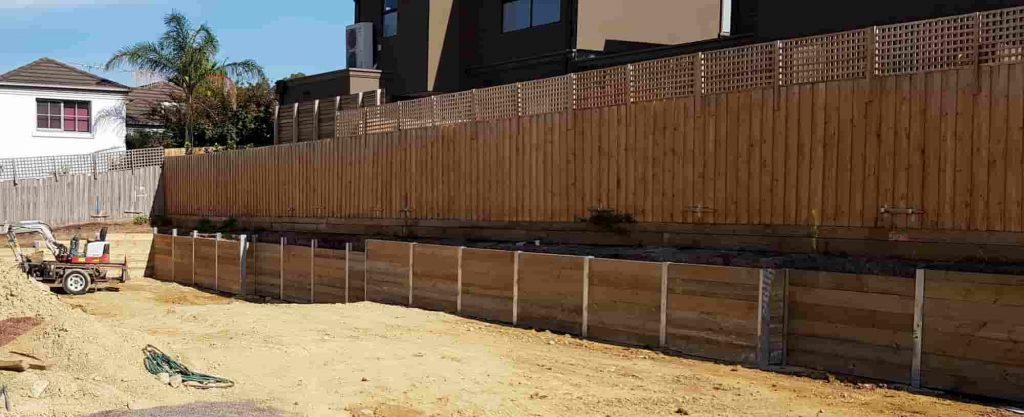
The ideal retaining wall surface projects rarely look significant. They look clean, intentional, and nearly uneventful. Excavation is controlled. The base is ready properly. The wall surface enters according to style. Drainage information are managed seriously. Backfill is not treated like rubbish disposal. Final degrees make sense. Absolutely nothing is rushed just because the face looks great early.
That peace is generally a sign that the team understands the wall surface as a structural system, not just a constructed things. An experienced retaining wall installer often tends to spend less time speaking up the visible materials and more time asking about maintained height, water, and loading. That is an excellent indicator. The same is true when speaking with retaining wall contractors Melbourne clients are considering for even more complicated sites. The strongest operators are commonly the least laid-back regarding surprise details.
Choosing between builder, specialist, and installer
Clients use these terms loosely, and in day-to-day conversation that is fine. A retaining wall installer, retaining wall builder, and retaining wall contractor might overlap in what they supply. What issues much more is whether the person or group comprehends the demands of the specific wall being proposed.
For a straightforward landscape application, an experienced retaining wall builder may take care of the job efficiently if the style needs are clear and the water drainage is properly attended to. For larger or more complex jobs, particularly where civil applications or uncertain site conditions are entailed, a retaining wall contractor with the capacity to work with engineering input is usually the safer path.
This is not regarding titles. It is about scope and judgment. A team that identifies the limits of presumption is even more valuable than a team that guarantees a quick outcome without initial understanding the ground.
Retaining wall surfaces reward respect for the unseen
There is a sensible lesson that comes up time and again on wall jobs. What nobody sees after completion is frequently what determines whether the wall surface executes for years or starts revealing distress early. The noticeable face might win the praises, however the actual job is done by the components hidden behind it and below it, especially the drainage path and the partnership between the wall surface and the soil.
That is true whether the task is a yard terrace or part of a broader civil package. The wall should hold back soil. It must stand up to side earth stress. As deepness boosts, so does need. If water is entraped, demand raises once more. When you understand those couple of truths plainly, a lot of good decision-making follows.
For property owners, developers, and project teams, that implies selecting a retaining wall installer or retaining wall contractor that treats the wall surface like framework, also when it beings in a landscaped setting. For contractors and installers, it indicates maintaining the basics front and centre on every task: site problems, drainage, packing, and code compliance.
Get those right, and retaining wall installation becomes what it should be, stable, well-reasoned job that quietly waits in place.